 Hack the Route Start free Open app
 The idea
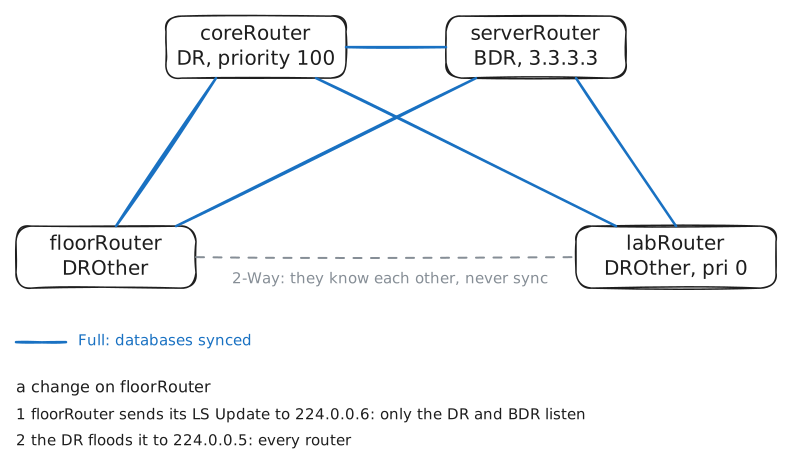
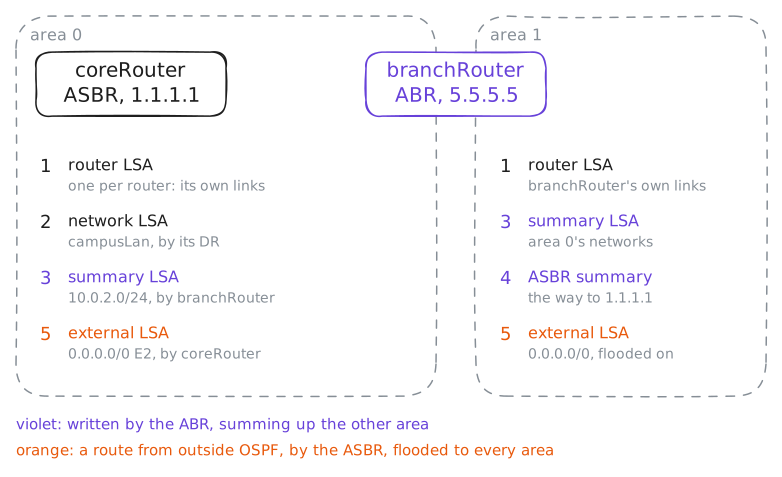
OSPF network types: four OSPF routers (coreRouter, floorRouter, serverRouter, labRouter) share one campus segment and elect a DR, so they do not all sync with each other; coreRouter's point-to-point link to branchRouter skips the election.
Steps
-
Electing a DR and a BDR
Four routers share campusLan. They elect a designated router (DR) that everyone syncs with, and a backup (BDR). Ask floorRouter who won. Every change on the segment passes through the DR, so it is the first thing to check.
floorRouter:~# vtysh
-
Full with some, 2-Way with others
Read labRouter's neighbours. Then floorRouter changes its cost on campusLan, and the change is recorded on the wire. Two routers that are not fully synced look broken at first sight, so learn which states are healthy.
labRouter:~# vtysh
floorRouter:~# vtysh -c 'configure terminal' -c 'interface campusLan' -c 'ip ospf cost 20'
Pro
4 more steps in the app
- A point-to-point link: nothing to elect
- Areas and the LSA types
- Hello and dead timers must match
- The DR keeps its job