 Hack the Route Start free Open app
 The idea
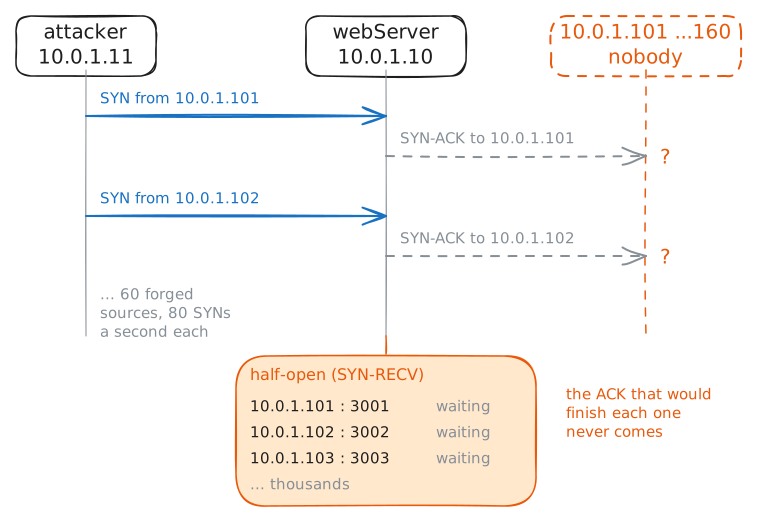
A SYN flood abuses the TCP handshake: the attacker sprays SYNs from forged source addresses and never sends
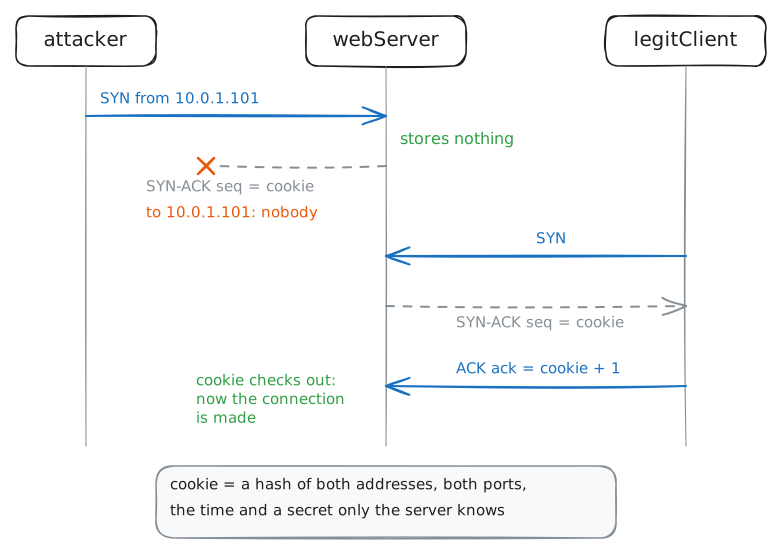
the final ACK, so the server fills with half-open connections. This lab watches the pile grow and shows what
really keeps the server alive — the kernel's SYN cookies — and where the attack is truly stopped.
Steps
-
A server answering normally
Before the flood, see what healthy looks like: a real client completes the handshake and gets its page, and the server holds no half-open connections.
legitClient:~# curl -s -o /dev/null -w 'legit=%{http_code}\n' --max-time 5 http://10.0.1.10/ webServer:~# ss -tn state syn-recv -
The flood
The attacker opens the flood: sixty senders, each spraying
SYNs at the server's port 80 from a different forged source (10.0.1.101–10.0.1.160) it does not own, and never sending theACK. The server's half-open connections pile up on its port 80, their peers addresses the attacker never had.webServer:~# ss -tn state syn-recv
Pro
3 more steps in the app
- Why the server survives: SYN cookies
- A blunt firewall limit, and its cost
- The real fix: filter forged sources at the edge