 Hack the Route Start free Open app
 The idea
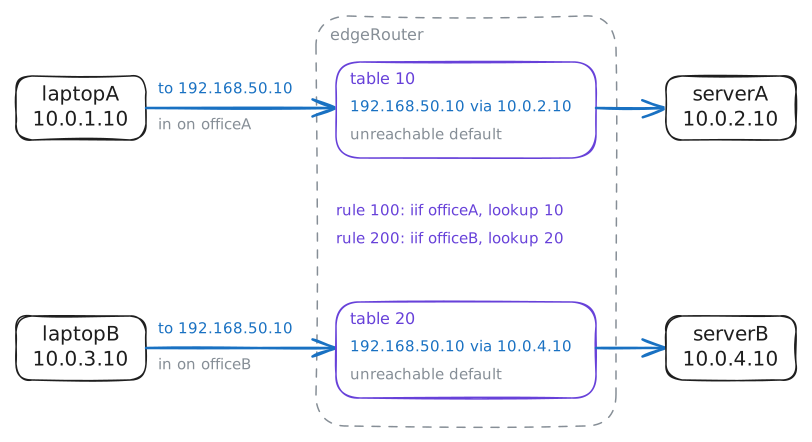
edgeRouter, a provider's Router, serves customer A (laptopA, serverA) and customer B (laptopB, serverB), who must
never meet and who both use the address 192.168.50.10. You will give each customer its own
Routing table on edgeRouter.
Steps
-
One routing table: every customer reaches every other
edgeRouter has one routing table,
main: every network it knows and the card that leads there. Read it, then fetch customer B's intranet from laptopA. A router forwards to any network its table lists, so one table makes one network of everyone.edgeRouter:~# ip route laptopA:~# curl -s -m 3 http://10.0.4.10/
-
Two customers, one address
Both customers numbered their intranet server
192.168.50.10, without asking anyone, as companies often do. Route it to serverA (10.0.2.10), then to serverB (10.0.4.10). A provider meets this clash every day, and one table cannot settle it.edgeRouter:~# ip route add 192.168.50.10/32 via 10.0.2.10 edgeRouter:~# ip route add 192.168.50.10/32 via 10.0.4.10
Pro
3 more steps in the app
- A routing table per customer
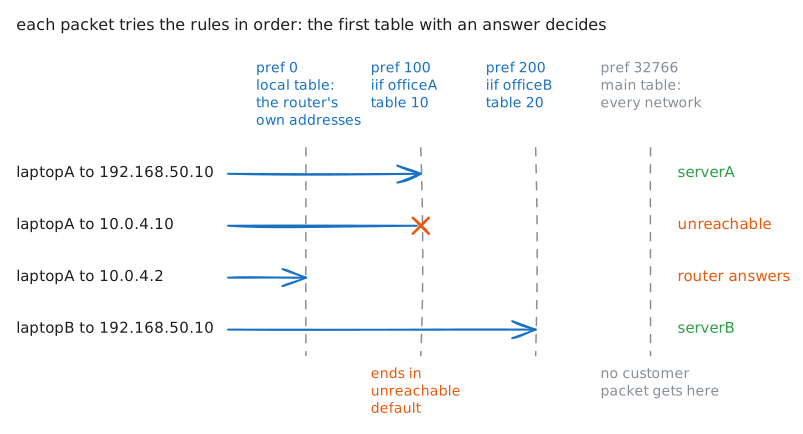
- The incoming card picks the table
- The customers are apart