 Hack the Route Start free Open app
 The idea
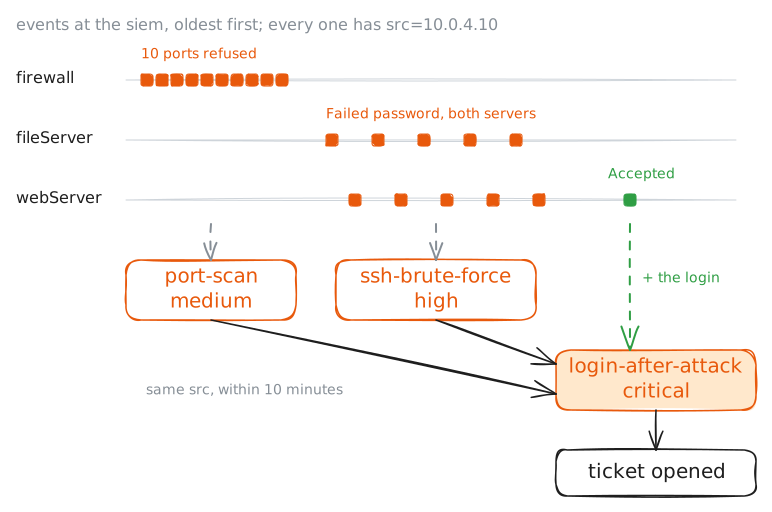
A SIEM gathers every device's log in one place and runs rules across all of them: not "this one line is bad" but "these events, from these devices, in this order". Here the firewall, fileServer and webServer ship their logs to the siem, the attacker scans and guesses passwords, the laptop logs in honestly, and ticketing opens a ticket for the serious alert.
Steps
-
Every device's log in one file
A rule can only join lines that sit in one place, so first follow one line there. A login on fileServer writes an
sshdline to its own log; a shipper forwards it to the siem, which files it in oneevents.logbeside every other device's lines. The siem's correlator names the rules it loaded.siem:~# grep -m1 'rules loaded' /var/log/siem/correlator.log siem:~# grep -m1 'fileServer sshd Accepted' /var/log/siem/events.log
-
A port scan the firewall refuses becomes one alert
The attacker scans many ports on fileServer. The firewall allows SSH (22), rejects the rest and logs each refusal, so every refused packet reaches the siem as a
firewall.rejectevent with itssrcanddport. Twenty such lines are noise; theport-scanrule turns them into one alert at ten distinct ports refused from one source in a minute.siem:~# grep -m1 port-scan /var/log/siem/alerts.log
Pro
3 more steps in the app
- Guessing spread over two servers, joined by source
- A login after the attack: a sequence rule, and a ticket
- The analyst's view: a guarded API and a dashboard