 Hack the Route Start learning Open app
Troubleshooting and ICMP
Troubleshooting method
Finding a fault in order: see it fail, guess a cause, test it, fix one thing, check everything, write it down.
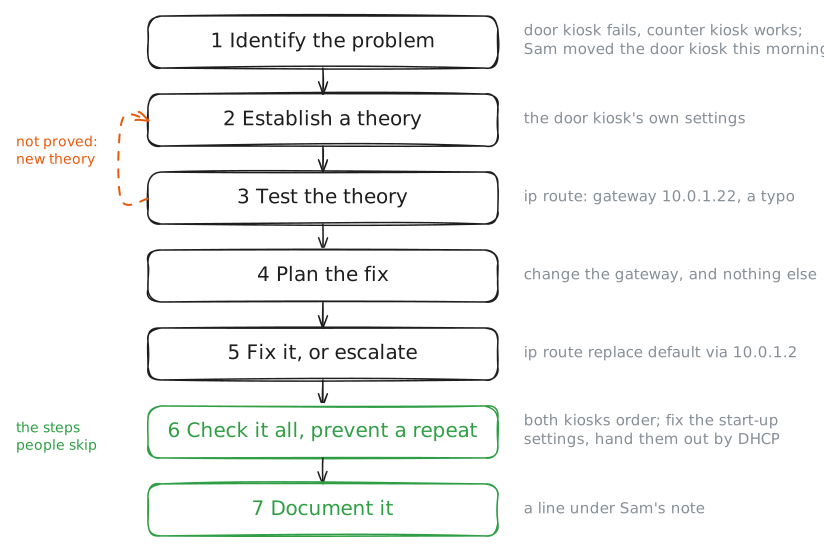
Identify the problem: make it fail in front of you, find how far it reaches (one machine or all of them) and ask what changed. Form a theory of probable cause and test it: climb the layers from the top or the bottom, or start in the middle with a ping by address and throw away half the suspects with each test (divide and conquer); compare with a machine that works. If the test disagrees, form a new theory or escalate. Plan the fix and what else it touches, change one thing at a time, then check the whole system, prevent a repeat, and document the symptom, the cause, the fix and how you checked it.
Read next
- OSI model Seven layers that split networking into jobs, from signals on a cable to the program, each wrapping the one above.
- ICMP The network's messages about packets: echo for ping, unreachable, time exceeded, too big.
- Traceroute Lists the routers on the way to a destination, by sending packets with TTL 1, then 2, then 3.
- Interface counters What a card has counted since it started: packets and bytes each way, and every frame it dropped or found damaged.