 Hack the Route Start free Open app
 The idea
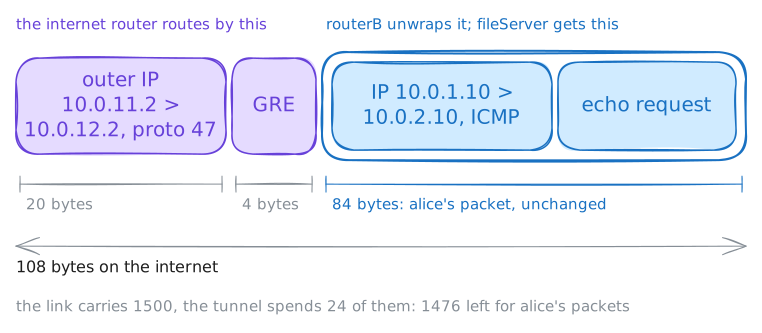
A tunnel wraps a private packet inside a public one, so two private sites can talk across a network that will not route them; GRE tunnels are the simplest kind. Here routerA and routerB build one across the internet Router, so alice at site A reaches fileServer at site B.
Steps
-
Building the tunnel, one end at a time
The internet will not carry the sites' private addresses, so each router must wrap them in its own public one. A GRE tunnel is a virtual card naming two public addresses: its own end (
local) and the far one (remote). Build routerA's end, then routerB's mirror.alice:~# ping -c 2 -W 2 10.0.2.10 routerA:~# ip tunnel add toSiteB mode gre local 10.0.11.2 remote 10.0.12.2 ttl 64 routerA:~# ip addr add 172.16.0.1/30 dev toSiteB routerA:~# ip link set toSiteB up routerB:~# ip tunnel add toSiteA mode gre local 10.0.12.2 remote 10.0.11.2 ttl 64 routerA:~# ping -c 2 -W 2 172.16.0.2
-
Routing the sites into the tunnel
A tunnel carries only what a route sends into it, so the sites' traffic still goes around it. Send site B's network out of
toSiteBon routerA, and site A's out oftoSiteAon routerB. Then trace alice's path.routerA:~# ip route add 10.0.2.0/24 dev toSiteB routerB:~# ip route add 10.0.1.0/24 dev toSiteA alice:~# traceroute -n -w 1 -m 5 10.0.2.10
Pro
4 more steps in the app
- A packet inside a packet
- 24 bytes less room: the tunnel's MTU
- Anyone on the path can read it
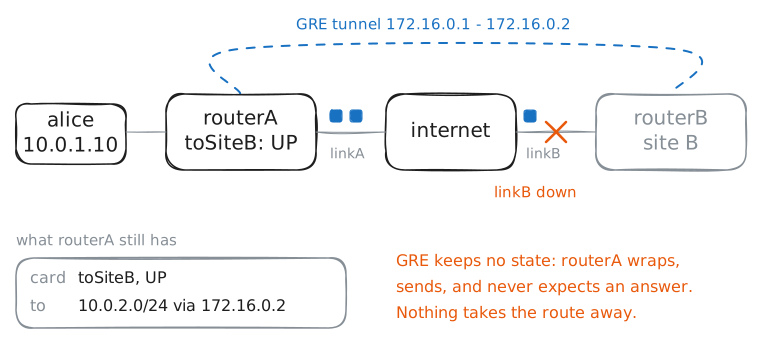
- The internet path fails; the tunnel does not notice